(Community Matters) Clear differences between two candidates. One goes to bat for Hyde Park’s oldest living resident (99yo), the other goes against her.
Vodpod videos no longer available.
One House, Two Approaches, posted with vodpod

(Community Matters) Clear differences between two candidates. One goes to bat for Hyde Park’s oldest living resident (99yo), the other goes against her.
Vodpod videos no longer available.
Posted in Uncategorized
(Community Matters) Robin Cravey is an elder statesman of Austin’s environmental community – Founding President of Friends of Barton Springs, Past Pres Zilker Neighborhood Assoc and Past Pres Zilker Elem School PTA
Vodpod videos no longer available.
Posted in Uncategorized
 (Community Matters) According to the 2008/2009 study, companies with engaged employees* experience 26% higher revenue per employee, 13% total higher total returns to shareholders, and a 50% higher market premium. 87% of employees who volunteered with their companies reported an improved perception of their employer. Full story here
* obviously goes beyond just volunteer programs
Posted in Uncategorized
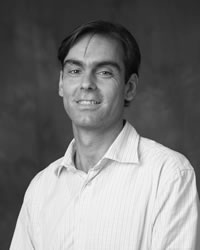 (Community Matters) Internationally award winning-architect, professor Juan Miró on the balance between Austin as a Landscape City and a Compact City – AAS guest column
excerpts: there are two ways to think about the city, two fundamentally different models that must be understood as we plan the future growth of Austin: the Landscape City and the Compact City. . . . The Landscape City is the dominant model in America: open, with low density and the majority of people living in single-family houses. . . . Austin always has been and still is fundamentally a Landscape City, a low density city of single-family houses in a forest. As the city grew, former “suburbs” like Hyde Park or Travis Heights became the “city core.” Austin is a particularly successful Landscape City. In fact, the overall beautiful integration in its natural landscape has been an important attraction for people moving here. . . .
the Compact City model emphasizes high density and multi-family housing. It is the prevalent model in Europe, where cities were walled off for defense purposes, sometimes well into the 19th century. These cities grew dense out of necessity. The Compact City model relies on mass transit and pedestrian-oriented buildings with vibrant street life. . . .
Great cities don’t give up on the ambitions and aspirations that define their identity. In Austin, we need to send an ambitious message to our City Council: We want both models.
First, we must preserve and continue to create the best Landscape City possible, adjusting this model of development as necessary so it can sustain the balance between nature and human habitation.
Second, we must commit to creating a viable alternative, a diverse and affordable Compact City that thrives, not only in the central core, but also in nodes across the city and the transit corridors that connect them.
Juan is a founder of Miró Rivera Architects. He, his wife, Rosa, and his founding partner Miguel Rivera are very dear friends
Posted in Uncategorized

 | Marianne on The Power of Purpose |
 | Brennan Griffin on Consensus – Austin as a… |
 | Brian Kelsey on Consensus – Austin as a… |
 | rgadler on Eloy Vela Sepulveda (1935… |
 | Janice and Jim Falic… on Eloy Vela Sepulveda (1935… |
 | inkydinkyparlezvous on Baby Sonya |

 Community Matters